The Concept of Being Born Again
Keeping time: The origin of B.C. and A.D.
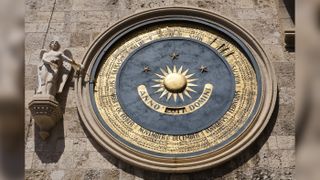
The terms "A.D." and "B.C." have their roots in Christianity. "A.D." stands for anno domini (Latin for "in the year of the lord"), and it refers specifically to the nascence of Jesus Christ. "B.C." stands for "before Christ."
The organization labels years based on a traditional notion of when Jesus was born — with the "A.D." cogent years later his birth and "B.C." designating the years that predate his nascence.
In English, it is common for "A.D." to precede the year, so that the translation of "A.D. 2022" would read "in the year of our lord 2022." In recent years, an alternative form of B.C./A.D. has gained traction. Many publications utilise "C.Due east.," or "common era," and "B.C.Due east.," or "before mutual era" in club to make non-Christians more comfortable using the system. Before we talk about how and why the system was invented, let's go some historical context.
When was A.D. invented?
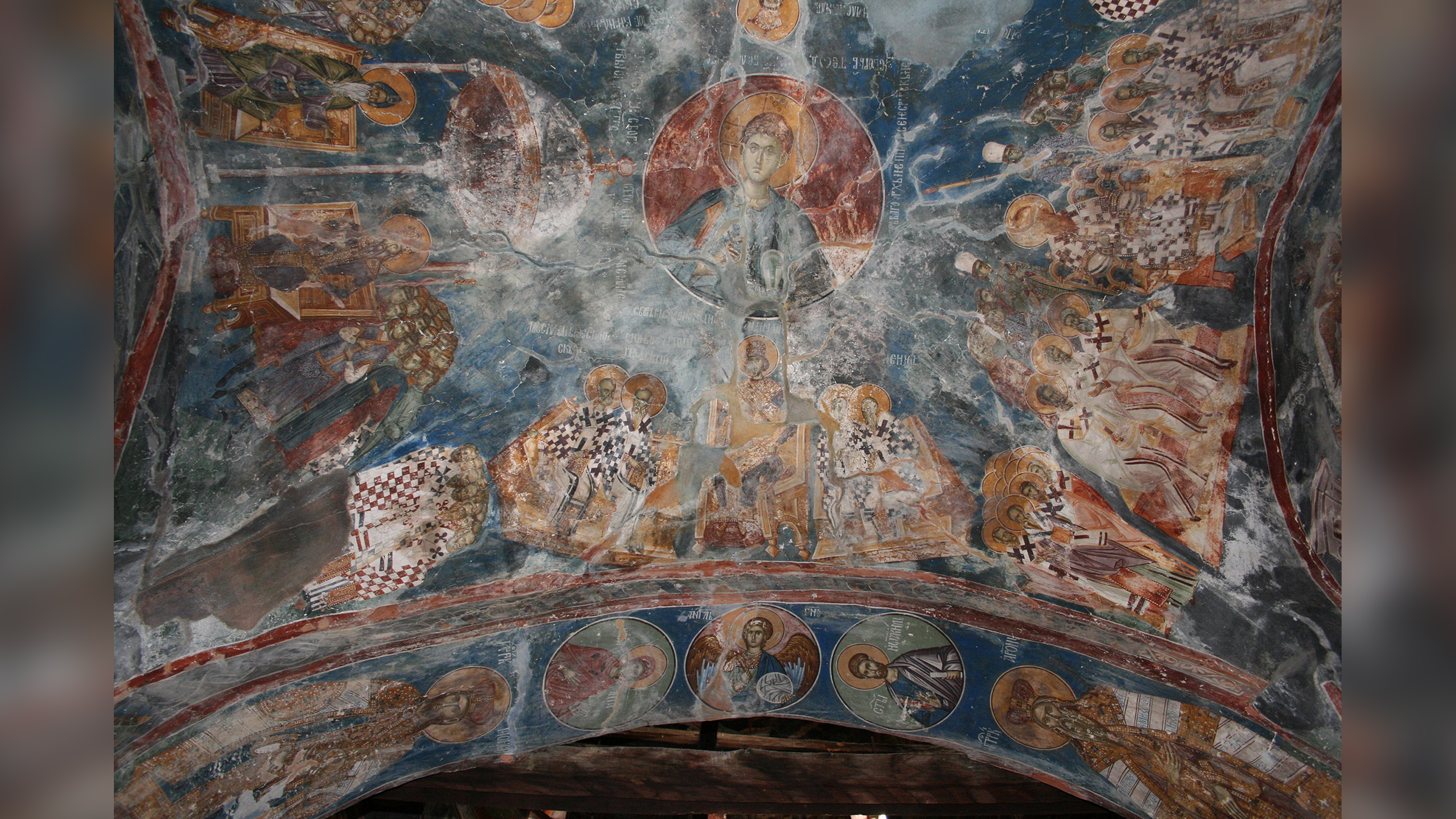
In the early on Middle Ages, the near important adding, and thus ane of the main motivations for the European study of mathematics, was the problem of when to celebrate Easter. The Offset Council of Nicaea, in A.D. 325, had decided that Easter would autumn on the Sunday following the full moon that follows thespring equinox. Computus (Latin for computation) was the procedure for computing this well-nigh important engagement, and the computations were set forth in documents known every bit Easter tables. It was on ane such table that, in A.D. 525, a monk named Dionysius Exiguus (sometimes called Dennis the Pocket-sized) of Scythia Minor introduced the A.D. system, counting the years since the nativity of Christ wrote Georges Declercq, a history instructor at Vrije Universiteit Brussel in an article published in the 2002 edition of the journal Sacris Erudiri.
Dionysius never said how he adamant the date of Jesus' birth, but he may have used surviving writings from early on Christians such as Clement of Alexandria or Eusebius of Caesarea to help judge the date, according to Alden Mosshammer, an emeritus professor of history at University of California at San Diego in his book "The Easter Computus and the Origins of the Christian Era" (Oxford, 2008). Dionysius attempted to fix A.D. 1 as the year of Jesus Christ'due south nascence, but was off in his estimation by a few years, with mod estimates placing Christ'south birth at around 4 B.C., Alive Science previously reported.
Anno Diocletiani to Anno Domini
Dionysius devised his system to replace the Diocletian organisation, named after Diocletian who was Roman Emperor from A.D. 284 to A.D. 305. This arrangement used the number of years since Diocletian became the emperor of Rome. The showtime year in Dionysius' Easter table, "Anno Domini 532," followed the year "Anno Diocletiani 247," according to Johns Hopkins University's Project Muse.
Dionysius made the change specifically to practice abroad with the retentivity of Diocletian, who had harshly persecuted Christians, according to the Globe History Encyclopedia. Diocletian issued edits that resulted in the killing or imprisonment of many Christians and the burning of their churches and scriptures, wrote E. Glenn Hinson, a retired professor of church history at the Southern Baptist Theological Seminary in Louisville, Kentucky, in his book "The Early Church: Origins to the Dawn of the Center Ages" (Abingdon Press, 2010).
The years "before Christ"
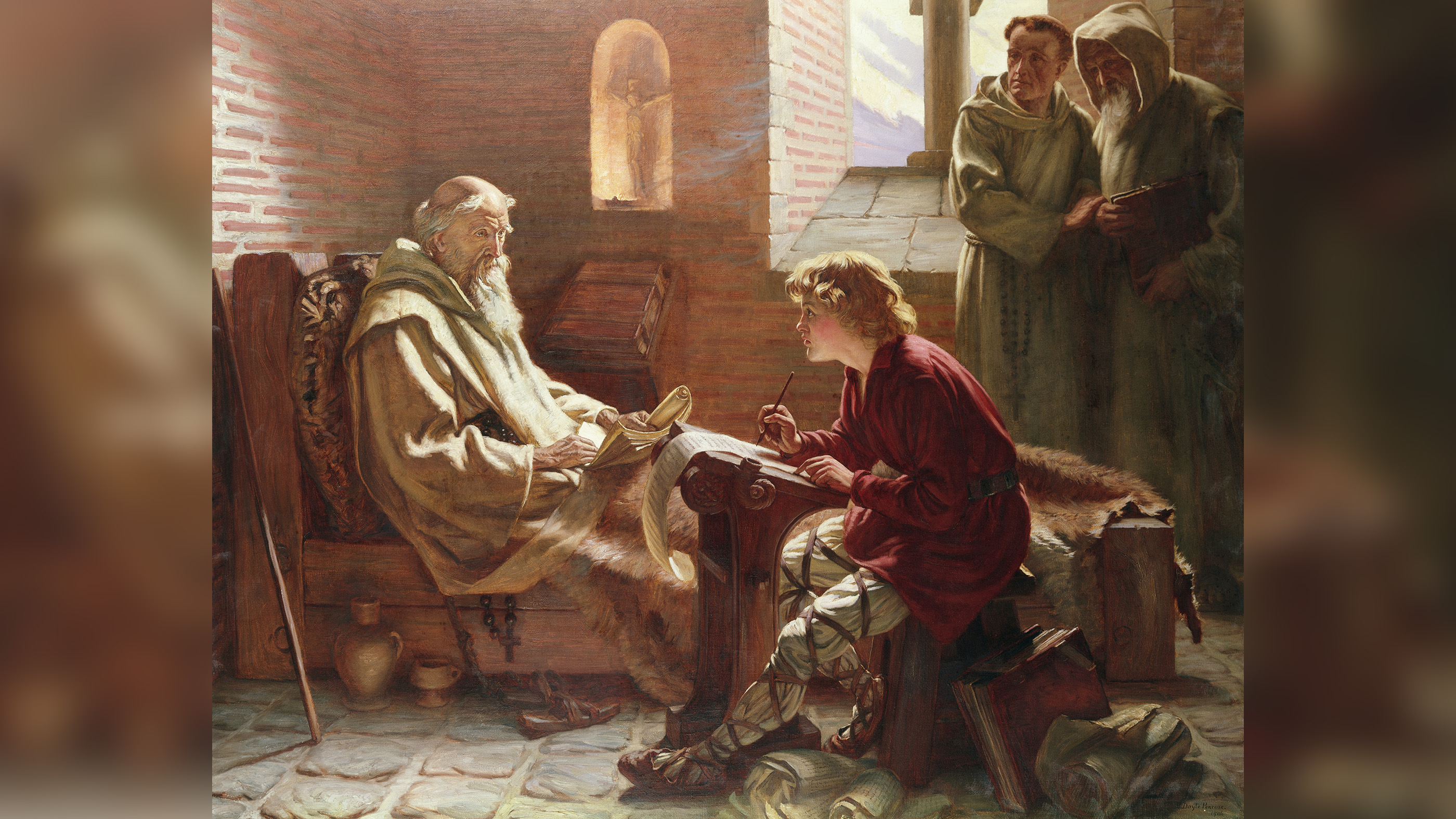
The addition of the B.C. component happened two centuries after Dionysius, when the Venerable Bede of Northumbria published his "Ecclesiastical History of the English People" in 731, wrote Antonia Gransden, who was a reader in history at the Academy of Nottingham, in her volume "Historical Writing in England: c. 500 to c. 1307" (Routledge, 1997). The piece of work brought the A.D. system to the attending of more people and expanded it to include years before A.D. one. Prior years were numbered to count backward to indicate the number of years an event had occurred "earlier Christ" or "B.C."
No twelvemonth null?
There was no "year naught" in Bede'south updated system, as the concept of the number zero had not appeared in Western Europe. "To Bede, also ignorant of the number nothing, the twelvemonth that came before 1 A.D. was 1 B.C. There was no year goose egg. Afterwards all, to Bede, nil didn't exist," wrote Charles Seife in his book "Zero: The Biography of a Dangerous Thought" (Penguin Books, 2000).
However, nadadid exist; our mod conception of zero was get-go published in A.D. 628 by the Indian scholar Brahmagupta. The thought would not spread to medieval Christian Europe until the 11th to 13th centuries.
Spread of A.D. & B.C.
The B.C./A.D. system became more pop in the 9th century afterward Holy Roman Emperor Charlemagne adopted the system for dating acts of government throughout Europe.
By the 15th century, all of Western Europe had adopted the B.C./A.D. arrangement. The arrangement'southward inclusion was implicit in the 16th-century introduction of the Gregorian calendar and it subsequently would become an international standard in 1988 when the International System for Standardization releasedISO 8601, which describes an internationally accustomed fashion to represent dates and times.
Common era and Vulgar era
The alternative form of "Before the Common Era" and "Common Era" dates back to 1715, where information technology is used in an astronomy volume interchangeably with "Vulgar Era." At the time, vulgar meant "ordinary," rather than "crude." The term "Vulgar Era" is fifty-fifty older, beginning appearing in a 1615 volume by Johannes Kepler.
There are a number of reasons why some individuals and organizations have changed from A.D. to C.E. These include showing sensitivity to not-Christians who use this dating organisation. They also include the fact that "Anno Domini" is probably inaccurate, since scholars generally believe that Christ was born some years before A.D. 1.
Additional resources
—Read more than about the date and time format used past ISO on the organization's website.
—Mosshammer's volume provides a detailed written report on Dionysius Exiguus and his computational methods.
—WebExhibits has an online resource about the Gregorian Agenda, including an easy-to-read history and answers to related questions, such as "What is the origin of the names of the months?"
Bibliography
Bede, Farmer, D.H, "Ecclesiastical History of the English People," Penguin, 2003
Declercq, G, Dionysius Exiguus and the Introduction of the Christian Era. Sacris Erudiri, 2002 https://www.brepolsonline.net/doi/abs/10.1484/J.SE.2.300491
Gransden, A, "Historical Writing in England: c. 500 to c. 1307," Routledge, 1997
Hinson, G, "The Early Church building: Origins to the Dawn of the Middle Ages," Abingdon Press, 2010. https://www.amazon.com/Early-Church building-Origins-Dawn-Centre/dp/0687006031
Mosshammer, A. "The Easter Computus and the Origins of the Christian Era," Oxford, 2008. https://world wide web.amazon.com/Early-Church building-Origins-Dawn-Middle/dp/0687006031/
Seife, C, "Aught: The Biography of a Unsafe Idea," Penguin Books, 2000. https://www.amazon.com/Zip-Biography-Dangerous-Charles-Seife/dp/0140296476

Owen Jarus writes well-nigh archaeology and all things about humans' past for Live Science. Owen has a bachelor of arts caste from the University of Toronto and a journalism degree from Ryerson University. He enjoys reading about new research and is always looking for a new historical tale.
Source: https://www.livescience.com/45510-anno-domini.html
0 Response to "The Concept of Being Born Again"
Post a Comment